
Manaslu Circuit Trek with Tsum Valley & Larke Pass: The Ultimate Himalayan Adventure Including Larke Peak Climbing (Complete Guide 2026)
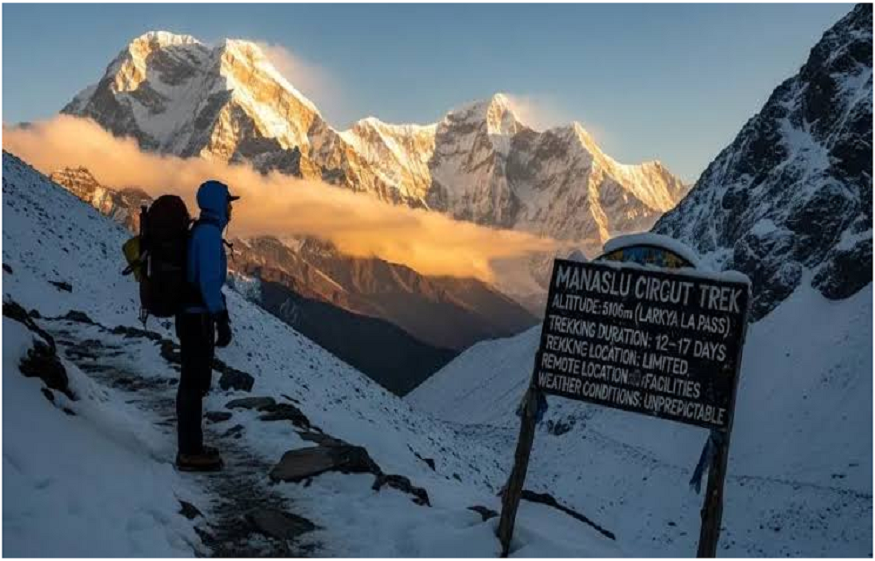
If you’ve spent any time researching Himalayan treks, you’ve probably noticed the same names popping up again and again — Everest Base Camp, Annapurna Circuit, the usual suspects. But ask around among guides and seasoned trekkers, and a different name keeps coming up lately: Manaslu. The Manaslu Circuit trek has quietly become the go-to route for people who want the drama of the high Himalaya without sharing the trail with three hundred other hikers a day.
What makes this region different isn’t just the lower footfall. It’s the combination of things you get here—remote mountain villages that still run on yak trains and prayer wheels; a side trip into the Manaslu Tsum Valley trek that feels like stepping into old Tibet; and the genuine physical challenge of the Larke Pass trek at over 5,100 meters. For those wanting to push further, there’s also the option of Larke Peak climbing, which turns an already-serious trek into a full mountaineering experience.
This guide walks through everything you need to actually plan this trip — the route, the permits, when to go, what it costs you physically, and what to pack — written the way an experienced guide would explain it over tea, not the way a brochure would.
Why the Manaslu Region Is One of Nepal’s Best Trekking Destinations
The Manaslu Conservation Area sits in west-central Nepal, wrapped around Mt. What’s striking the first time you walk in here is how fast the landscape changes — you start in sweaty, terraced farmland, and within a week you’re staring at glaciers and yak pastures above 4,000 meters.
Read More : Creating Secure and Comfortable Environments Above the Clouds
The conservation area protects more than scenery. It’s home to snow leopards, Himalayan tahr, and red pandas, plus centuries-old monasteries tucked into cliffsides that most tourists never hear about. Villages along the Manaslu Circuit trek and the Manaslu Tsum Valley trek still practice a form of Tibetan Buddhism largely unchanged for generations, and you’ll cross more swinging suspension bridges over glacial rivers than you can count. It’s raw, it’s a little wild, and that’s exactly the appeal.
Manaslu Circuit Trek Overview
The classic Manaslu Circuit runs roughly 170–180 kilometers depending on your start and end points, and most people budget 14 to 18 days to do it properly, permits and rest days included. The high point of the trek is Larke Pass at 5,106 meters — that’s your big push, usually somewhere in the middle-to-late stretch of the journey.
Difficulty-wise, this sits in the moderate-to-challenging bracket. It’s not technical trekking, but the daily elevation gain adds up, and altitude is the real opponent here, not the terrain itself.
Most trekkers start from Soti Khola or Machha Khola and finish either in Dharapani or continue on toward the Annapurna region. Accommodation is entirely tea-house based, so you’re not camping, which keeps things reasonably comfortable. The scenery along the way — waterfalls, pine forests, and eventually stark alpine terrain — is honestly some of the best you’ll find on any Larke Pass trek route in Nepal.
What Makes the Manaslu Tsum Valley Trek So Special?
If the main circuit is already off the beaten path, Tsum Valley is the path nobody’s even heard of. This side valley was only opened to foreign trekkers in 2008, and it shows — the culture here feels untouched in a way that’s genuinely rare these days.
Tsum was historically a hidden Buddhist sanctuary, and you can feel that history in places like Mu Gompa, perched high above the valley floor, and Rachen Gompa, home to a community of Buddhist nuns. Chhokang Paro, with its wide valley views and old chortens, is another highlight most people don’t expect.
Villages here still follow traditions tied closely to Tibetan Buddhism — you’ll see mani walls, fluttering prayer flags, and locals who’ve barely interacted with outside visitors. Adding the Manaslu Tsum Valley trek onto your itinerary costs you an extra 4–5 days, but almost everyone who does it says it was the most memorable part of the whole trip. There’s a stillness here that the main circuit, for all its beauty, doesn’t quite have.
Crossing Larke Pass – The Most Exciting Day of the Trek
Everything on this trek builds toward one day: crossing Larke Pass at 5,106 meters. You’ll start absurdly early, often around 4 or 5 a.m., while it’s still dark and bitterly cold, because you want to be over the pass and descending before the afternoon winds pick up.
The climb itself is a slow grind over snow and loose rock, but the payoff is enormous — a 360-degree wall of Himalayan giants once you crest the top, including views toward Himlung Himal and Cheo Himal. It’s genuinely one of the best mountain panoramas in Nepal, pass or no pass.
Safety matters a lot here. The descent to Bimthang afterward is long and knee-punishing, so trekking poles earn their keep. Physically, it’s tough. Mentally, crossing the Larke Pass trek‘s namesake pass is the kind of achievement that sticks with you long after the blisters heal.
Larke Peak Climbing: Taking the Adventure Beyond the Pass
For trekkers who want more than a pass crossing, there’s an option to attempt Larke Peak, sometimes offered alongside the trek for those craving an actual summit. This is where things shift from trekking into proper mountaineering territory.
Unlike the past, Larke Peak climbing involves glacier travel, use of crampons and fixed ropes in sections, and a summit push that requires basic climbing competence — this isn’t something you improvise on the spot. You’ll need a separate climbing permit on top of your trekking permits, and it’s non-negotiable to climb with a certified local climbing guide who knows the route and current conditions.
Equipment-wise, expect to need harnesses, ice axes, and technical clothing beyond your standard trekking kit. The summit views, unsurprisingly, are next-level — a genuinely rare vantage point over the Manaslu massif. This climb suits people with prior high-altitude or basic mountaineering experience; it’s not the right call for a first-time trekker looking to test the waters.
Best Time for the Manaslu Circuit Trek and Larke Peak Climbing
Spring Season
March through May is one of the two prime windows. Temperatures are moderate, rhododendrons bloom lower down the valley, and visibility is generally solid for the high sections. It’s also a favored window for those adding Larke Peak climbing, since snow conditions tend to be more predictable.
Autumn Season
September through November is arguably the most popular stretch, and for good reason — post-monsoon skies are clear, trails are dry, and mountain views are about as crisp as they get. This is peak season for the Manaslu Circuit trek, so tea houses fill up faster.
Winter (December–February) is possible but brutal at altitude, with Larke Pass sometimes closed due to snow. Monsoon season (June–August) brings landslides and leech-heavy lower trails, and cloud cover ruins the views — best avoided unless you have a specific reason to go.
Permits Required for the Manaslu Region
Because this is a restricted area, you can’t just show up and start walking. You’ll need the Restricted Area Permit (RAP), issued only through a registered trekking agency, along with the Manaslu Conservation Area Permit (MCAP) and, since the route eventually connects toward Annapurna, often the Annapurna Conservation Area Permit (ACAP) too.
If you’re adding the Valley detour, a separate Tsum Valley permit is required as well. TIMS cards aren’t currently mandatory for this specific region the way they are elsewhere, though rules do shift, so it’s worth double-checking before you fly out. These permits exist to control numbers and protect a genuinely fragile ecosystem and culture — they’re a hassle, sure, but a necessary one.
Difficulty Level and Altitude Challenges
Let’s be honest about this one: the Manaslu Circuit trek is not a casual walk in the park. You’re looking at 5–7 hours of walking most days, with some longer days pushing 8 hours, especially around the pass crossing.
Elevation gain is gradual for the first week, then ramps up sharply as you approach Samdo and Dharamsala before the Larke Pass trek summit day. Acclimatization days are built into most itineraries around Samagaun for this exact reason — altitude sickness is the single biggest risk on this route, more than any physical terrain challenge. A reasonable baseline fitness level (regular hiking, decent cardio) goes a long way, but respecting the altitude matters more than raw fitness.
Accommodation and Food During the Trek
Tea houses along the route are basic but functional — simple rooms, shared bathrooms in most places, and thick blankets that you’ll be grateful for once you’re above 3,500 meters. Don’t expect luxury; expect character.
Food-wise, dal bhat is the trekker’s staple for good reason — unlimited refills and genuinely fuels the long days. Noodle soups, garlic soup (locals swear by it for altitude), and simple fried rice round out most menus. Wi-Fi and charging are available in most tea houses but cost extra the higher you go, and drinking water should always be purified or treated — don’t risk the tap.
Suggested Itinerary for the Manaslu Circuit Trek with Tsum Valley
A typical route runs from Kathmandu to Machha Khola, then up through Jagat, Deng, and Namrung before reaching Samagaun, your acclimatization base near Manaslu itself. From there, many trekkers branch off into the Manaslu Tsum Valley trek, visiting Mu Gompa and the valley’s quieter villages before rejoining the main trail.
Back on route, it’s on to Samdo, then Dharamsala, positioning for the big crossing over Larke Pass and down into Bimthang. From Bimthang, the trail descends toward Dharapani, where most people either end the trek or connect onward into Annapurna territory.
This isn’t a rigid day-by-day plan — plenty of trekkers add rest days, adjust for weather, or extend the Tsum detour depending on how much time and stamina they’ve got. Flexibility is part of the deal on a Larke Pass trek like this one.
Essential Packing List for the Trek
Layering is everything on this trek since you’ll go from sweaty lowland walking to biting alpine wind in the same week. A solid down jacket and a four-season sleeping bag rated for sub-zero temps are non-negotiable once you’re near Larke Pass. Good trekking boots, broken in well before you arrive, will save your feet more than anything else on this list.
Trekking poles help enormously on the long descent from the pass, and a headlamp is essential for the pre-dawn summit push. Bring water purification tablets or a filter rather than relying on bottled water, along with a basic first-aid kit covering blister care and altitude medication if your doctor’s approved it. Gloves and good UV-blocking sunglasses matter more at altitude than people expect — snow glare is no joke up there.
Why Hiring a Local Guide Makes a Big Difference
Given the restricted-area status, hiring a licensed guide isn’t optional for the Manaslu Circuit trek — it’s built into the permit system. But beyond the legal requirement, a good local guide genuinely transforms the trip.
They know which tea houses are actually warm, which shortcuts save you an hour, and how to read weather patterns that would mean nothing to an outsider. In an emergency — and altitude-related emergencies do happen here — having someone who knows the evacuation routes and can communicate with rescue teams is invaluable. There’s also the cultural layer: guides from the region can translate not just language but context, explaining why a certain monastery matters or what a ritual you’re witnessing actually means. And practically, hiring locally keeps tourism money circulating in the communities that make this trek what it is.
Is the Manaslu Circuit Trek Right for You?
This trek rewards a specific kind of traveler. If you’ve got decent trekking legs already, some patience for basic tea-house living, and a genuine interest in culture rather than just ticking off a summit photo, you’ll love it here.
Budget-wise, it sits comfortably below Everest Base Camp costs but above a standard Annapurna teahouse trek, mostly due to permit fees. Time-wise, you’re looking at two-plus weeks minimum if you want to include Tsum Valley properly. If you’re chasing solitude and photography opportunities away from crowds and don’t mind a bit of physical suffering for spectacular payoff, the combination of the Manaslu Circuit trek, Manaslu Tsum Valley trek, and optional Larke Peak climbing checks every box. If you want fast wifi, luxury lodges, and a well-trodden path, this probably isn’t your trek.
Conclusion
Put it all together — the Manaslu Circuit trek, the detour into the Manaslu Tsum Valley trek, the grind and reward of the Larke Pass trek, and for those wanting more, Larke Peak climbing — and you’ve got one of the most complete Himalayan experiences Nepal has to offer. It’s not polished or overrun, and that’s precisely the point.
Read More : Chartering for Wellness: Ibiza’s Holistic Yacht Experience
None of this happens by accident, though. Get your permits sorted early, pick an experienced local guide who actually knows the Manaslu region rather than a generic Kathmandu agency, and build enough time into your schedule to acclimatize properly rather than rushing the pass. Trek responsibly, respect the villages and monasteries you pass through, and this region will give you something the more famous routes simply can’t anymore — genuine remoteness paired with real cultural depth. Start planning now, and you’ll be crossing Larke Pass under a clear autumn or spring sky before you know it.
Frequently Asked Questions
1. How difficult is the Manaslu Circuit trek for beginners?
It’s manageable for a fit beginner with some hiking background, but it’s not a true beginner trek. The daily walking hours (5–7 on average) aren’t extreme, but altitude above 4,000 meters is genuinely demanding regardless of fitness level. First-timers should build in extra acclimatization days and go in with realistic expectations about the pass-crossing day.
2. Is the Manaslu Tsum Valley trek worth adding to the itinerary?
For most trekkers, yes. It adds around 4–5 days but delivers a cultural depth — ancient gompas, quiet villages, and minimal tourist traffic — that the main circuit alone doesn’t fully capture. If time and permits allow, it’s widely considered the highlight rather than a side note.
3. When is the best time to cross Larke Pass safely?
Spring (March–May) and autumn (September–November) are both solid choices, with autumn generally offering the clearest skies and most stable trail conditions. Winter crossings are riskier due to snow accumulation and possible closures, so most guides steer clients away from that window.
4. Do I need climbing experience for Larke Peak climbing?
Some prior experience with basic mountaineering techniques — using crampons, ice axes, and fixed ropes — is strongly recommended. It’s not a technical climb on the level of the big 8,000-meter peaks, but it’s still a real climb, not an extension of the trekking pass, and should be attempted with a certified climbing guide.
5. How many days do I need for the Manaslu Circuit trek with Tsum Valley?
Budget 18–21 days total, including Kathmandu arrival, the main circuit, the Tsum Valley detour, and acclimatization days. Factors like weather delays, personal pace, and whether you add Larke Peak climbing can extend this further, so building in a few buffer days is always a smart move.